2025.1224 / End of Year Book Review
I spent a few hours figuring out what books I wanted to sell. It's becoming more of a challenge as I continue to curate my library of 300+ volumes (about 50% of which I have read and which I am to substantially finish reading some time in my early 40's). Every round of a box full of books I sell it takes me longer to figure out which I'm willing to part with because some have become purely sentimental, tied to particular memories or periods of my life, and others I once enjoyed but am not inclined to read again. Still others I think of as future reference material for personal or career-specific goals, but I don't know if I'm justified in holding indefinitely. As such, for the books that have had more of a sentimental weight for me over the years, that there's a high probability I would not read again, I've decided that it makes it easier for me to remove them by providing a brief review of what each of those books meant to me. I think there may be more to come, but I'll start with the following which held some significance at certain times:
Machine of Death by Ryan North
Machine of Death is an anthology of short stories about people's experience with a machine that foretells how a particular person is going to die. It's up to each author to creatively determine how the machine works and the course of events that play out over their characters' experiences. Sometimes it dispenses a single word or a vague phrase, but the idea is to explore the emotions and behaviors as a result of learning of one's impending doom. There was a time in my life where stories like that got me thinking more existentially than I ever had or for the first time - opening up a wider perspective, and alleviating in some respect that common fear of death. Fittingly, I read this at a time of relative uncertainty in my life not too long after I started college and in the midst of total stagnation in my career search. Today I'm far more "afraid" of the big goals and ambitions that I may not have achieved by the end of life than I am of death itself. The only way I could be happy on my deathbed is if I knew, with full confidence and honesty, that I lived the best possible life I could, and that is why I make sure that every day is the best possible day I can possible live. Stories such as those contained in this anthology are therefore of little to no use to me; they don't inspire anything. That said I'll leave it with this, from Don Watkins's Effective Egoism:
I don't often think about death, but recently it occurred to me that the conventional wisdom, which says that no one knows what happens after we die, is 100 percent wrong. We have all experienced death. We spent an eternity not existing before we were born. It wasn't painful, it wasn't tragic. There is nothing to fear. But how many of us have truly experienced life? That's what frightens me. Not death, but the failure to live. The failure to enjoy my brief time here on earth. That would be the tragedy. But whether or not I enjoy my life is under my control. And whether or not you enjoy your life is under your control. You have free will. You have the power to think, to learn, to grow. You have the power to chart your own course. And, armed with a morality of happiness, you have the power to create a self and a life that you love.
Little Things: A Memoir In Slices by Jeffrey Brown
I read Little Things around the same time I read Machine of Death, but Little Things was a far less nihilistic, simply melancholic, glimpse into the author's early experience as an illustrator. They were cute stories and ultimately for me, little more than entertainment.
Being Peace & Love In Action by Thich Nhat Hanh
Being Peacewas a powerful little volume. It was handed to me by a colleague in high school while we were cleaning out our lockers. He thought I could benefit from it, and I absolutely did (though not at the time) in a certain respect, but not what you might expect. It wasn't until a few years later, in college, when I realized how important it was to my personal development and maturity. A story for another time, in my sophomore year in college I spent a lot of time understanding minimalism as a lifestyle and eventually traced its spiritual origin to certain ideas in Zen Buddhism. While I no longer agree with most or all of the premises as discussed in either book, the value I took from them has to do with the importance of patience, slowness in action, and a kind of self-consciousness.
(read again? foundational, gift, set me on a path, planted the seed of minimalism, simplicity, curation)
Gods From Outer Space by Erich von Daniken
Not much needs to be stated about this book. For a time I entertained the possibility of ancient aliens, but it has since always remained that - an entertaining notion. Zero actual evidence exists for this; it is pure speculation. von Daniken certainly started something. I still retain a handful of books positing lost civilizations, those by James Churchward, but I don't take his theories any more seriously than von Daniken's, only as fun fantasy. I don't deny the possibility of a lost civilization, evidence of ancient cultures gets uncovered by archaeologists every so often, but I do deny the methodologies of those such as von Daniken or Churchward before him, who posit lost civilizations on the basis of very loosely connected "evidence", and therefore deny their conclusions. If they take their conclusions seriously they have to take their methodologies seriously, which I presume they think they do, since for them they consider their research actually research whereas I think it's closer to opinion. They may admit certain of their conclusions are purely speculation, but it nonetheless remains that their scholarship is poor for supposedly legitimate conslusions. I've determined, until actual evidence emerges, not simple rationalizations, the subject is no longer worth much of my time beyond pure entertainment.
Iceland India Interstate by Colin Wright
This is a non-fictional narrative about the author's particular set of travel experiences that got me excited about the idea of independent publishing and creating my own standards. I was first introduced to Colin Wright through his Exile Lifestyle blog during that minimalist phase of my life (some important lessons of which I've retained, some of which I've since rejected as arbitrary and therefore unnecessary, more to come one day on what I believe is the proper approach to the minimalist lifestyle) going down the rabbit hole of various specialists on the subject. Before reading Iceland I had already read several e-publications, The Micropublisher and In Treehouses both by Thom Chambers, one of the early minimalist lifestyle advocates, Leo Babauta, the "original" minimalist, and the now famous The Minimalists, and was inspired by the kind of output that was possible in the digital space that wasn't related to social media but independent, bespoke work. Colin published through The Minimalists's Asymmetric Press and the thought of creating a totally remote, digitized press or business set me on a path to thinking more specifically about what I wanted for my career long-term, for whatever career I would end up pursuing - about the entrepreneurial possibliities of digital media, which if I had started acting on then I would probably be benefitting from now. Years later, I'm still getting started, but looking back at this work, I get an urgent inclination to take action now.
Nadja by Andre Breton
Nadja is a surrealist novel, possibly the first, by self-proclaimed Situationist / psychogeographer Andrew Breton. I was, and still am, fascinated by the concept of psychogeography - the exploration of the urban environment, typically by wandering (see John Rogers, Nick Papadimitriou, The Wander Society). I am less fascinated by the story itself than by the idea of telling a story by framing it within a particular urban experience - where the urban character becomes as much a character as a person. I think this can inspire us to greater awareness of the built environment, to overlooked details, to experiences we would otherwise take for granted that are too easy to pass up. For an example, have a microadventure in an urban center, even if you've been there already, but this time take only right turns, or walk to only particular, and it's important to only walk when possible. Imagine paying this kind of attention everywhere - even boring places begin to get interesting, previously mundane details can start to fasinate as you wonder why something is there, who made it, why it was built that way, and how you could change it, make it better. This is why I am in love with design, and the built environment, architecture, in particular.
2025.1214 / On Context & Architecture
When I look at a skyline of old and new skyscrapers and old low-rise buildings, before I contemplate a contrast in styles, I try to understand the contrast in philosophies or at least symbolism: That of the skyscraper symbolizes aspiration, boldly climbing into the future, and that of the buildings of tradition or the status quo expressing a desire for the familiar, for conformity, trying hard to fit in, a sense of timidity, modesty or humility. I was taught that the powerful forces are the ones climbing towards the sky, the ones we're often strangely quick to shame and unfairly criticize, but both are powerful forces, and only one is working to keep us on the ground in a sense, to keep us fitting in. The fact is there is far more of the vernacular (the real status quo) of common buildings with traditional, revived, remixed old styles outside of a downtown core than there are modern skyscrapers in any given city. The glass and steel skyscrapers, high-rises or mid-rises that are often targets of criticism are the exceptions to the rule in actual quantity. The philosophy that is worth following, if we each care about our own individual future and we take it seriously, is that which expresses aspiration, courage, and progress - skyscraper, glass and steel, or otherwise. Without going deeply here into how a materiality could reflect those expressions, I think those expressions are often best embodied in the buildings that seek to stand out from the status quo, regardless of how radical or foreign they are among their surroundings. Those who scoff at towers, particularly modern towers, being out of context and casting their shadow among traditional buildings, misunderstand which of those buildings are actually out of context. Traditional buildings are expressions of the values of the past, a culture or subculture in decline, or one long gone, expressions using familiar tectonics, what we might understand as the status quo. Traditional buildings are what need to be built over, or at the very least improved even if it means losing the tradition they symbolize - they are the out of context, dated expressions for a society whose motivation is to move forward, to move on, into a brighter future; that is, if that society takes moving forward all that seriously.
I get the sense that such a motivation is taken precariously, with hesitation, instead of boldly, that for many reasons we have a certain fear of the future, but architecture and art's place is to posit the best of the values and virtues that people embody across many domains and realize them in the world at the very least through aesthetic expression. Being bold doesn’t mean to suggest being reckless, but boldness can certainly mean being rationally confident. It's the job of the designer and architect to create and project this rationally confident expression and optimism for the future in his work. I got so used to hearing the common criticism that modern buildings are often out of context with their surroundings, but never thought to consider that the very context it sits in is simply dated, jaded, yet there is so much emphasis placed on new buildings "blending in", "considering their context" (particularly with regard to aesthetics, and just another way of saying indirectly to make it look like its neighbors just with modern materials). Western society excels at fostering and encouraging individual expression. We do this with fashion so easily, yet there are plenty of times when it seems so difficult with our buildings - the truly, fundamentally, unique buildings typically being so rare, reserved for the firms with the reputation or the right pull in government bureaucracies. Why can't the emphasis be on changing the context, and why can't this be normalized? I think it would take a cultural shift, the general populace, not just developers, demanding different architecture, and change in the way people think about the usefulness of architecture in their lives and a greater appreciation for it. That it part of the job of the architect - to promote an appreciation for architecture, not just by making exquisitely habitable and healthy environments, but enhancing that experience, both inside and out, by pushing the boundaries, breaking tradition if need be, and positing something radical. Many of us are encouraged to be ourselves when we're still children, to explore, to express ourselves and be unique, don't follow the crowd. Why must we fit in then when we design our buildings?
A building is only out of context when we assume the context never has to change, and that architects and developers should always aim to design towards the status quo. I believe architects and developers should always work to create wholly unique works of art when given the opportunity, and an interesting thing about opportunity, is that designers of all kinds have the ability to physically create it.
In Effective Egoism, Don Watkins states, An artist builds a unique world, a universe that conveys: 'This is life as I see it.'" An artist recreates reality... stylizes reality. She selects every detail...It allows us to live inside a world where our values have been achieved, where the best possible is realized, where we can look out and see what we're trying to build fully finished.
I want to open my own design agency one day. One thing I've learned so far is that entrepreneurs don't wait for the world they want, they go out and build it. All the more fitting for an architect.
2025.0614
Ukiyo-E: I get the sense that, when looking at Japanese landscape woodblock paintings, particularly those by Hiroshige, the eye is captured by the horizon and the viewer is pulled toward himself, which is the opposite of Western traditional perspective paintings that tend to “radiate perception” from the viewer outward. The Japanese landscape painting appears to radiate inward (towards the viewer) from an outside source. This could be an effect of the flatness of the painting itself, through outline and color, such that foreground and background are flattened, while preserving a kind of proto-oblique perspective. This is also achieved through an aerial orientation and the scalar recession into the distance of repeated elements…, rather than by directly expressing rectilinear geometry in perspective as in the Western tradition of painting. Another aspect that creates this effect of outward radiance and pull towards the distance is the foregrounding of a natural path - river, a literal walking path, or trail.
2024.0630
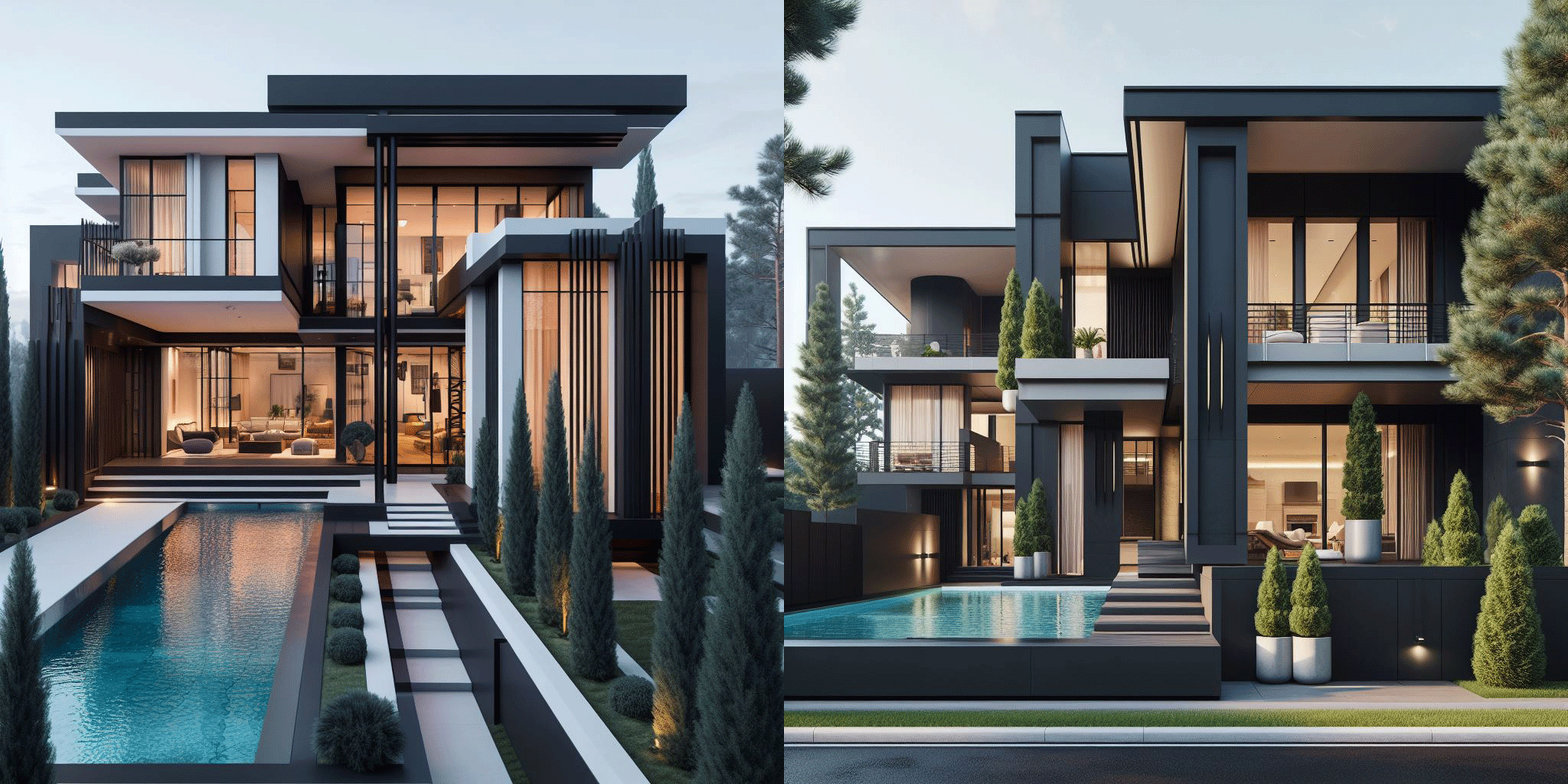
Microsoft Designer: a single-family home in a parametric and art deco style
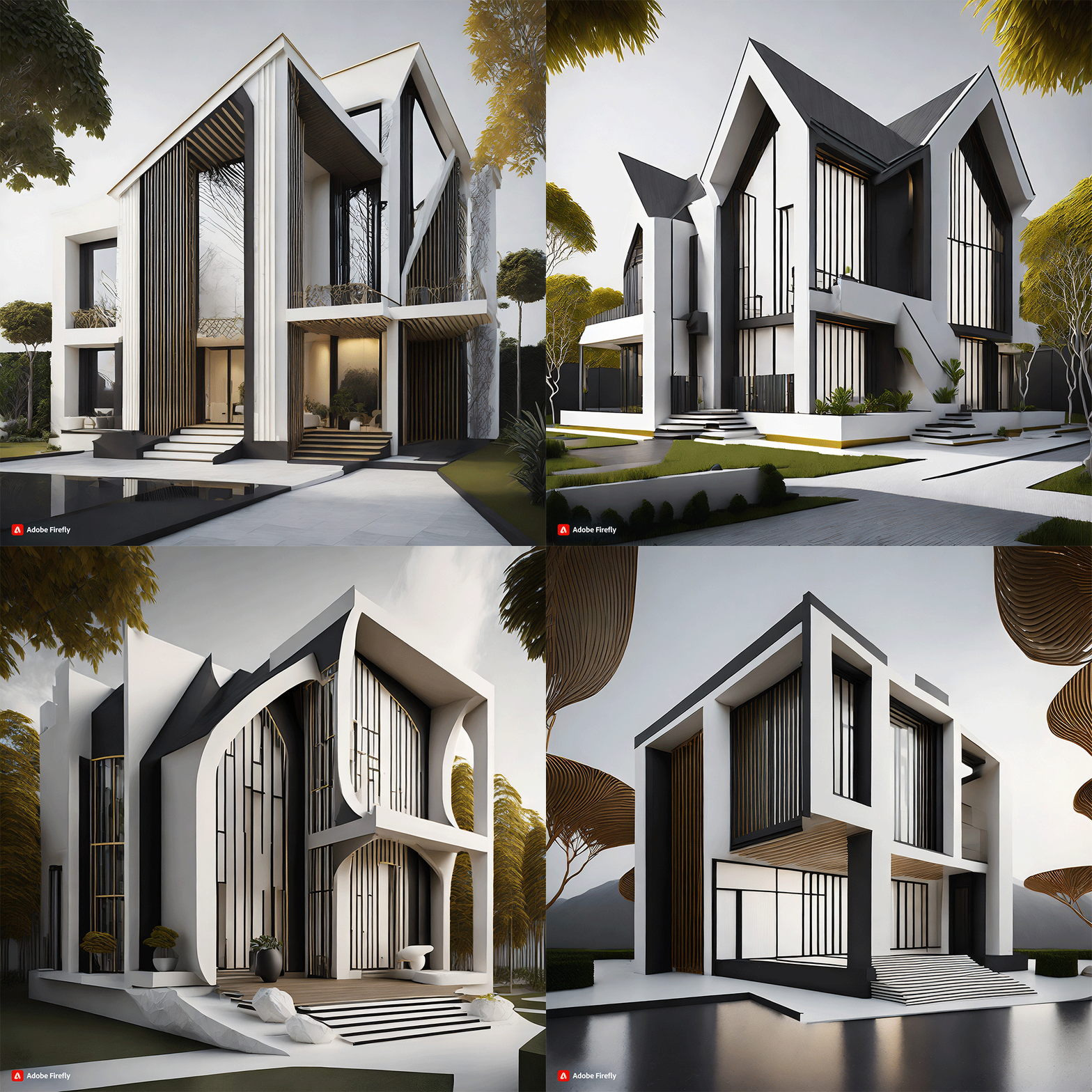
Adobe Firefly
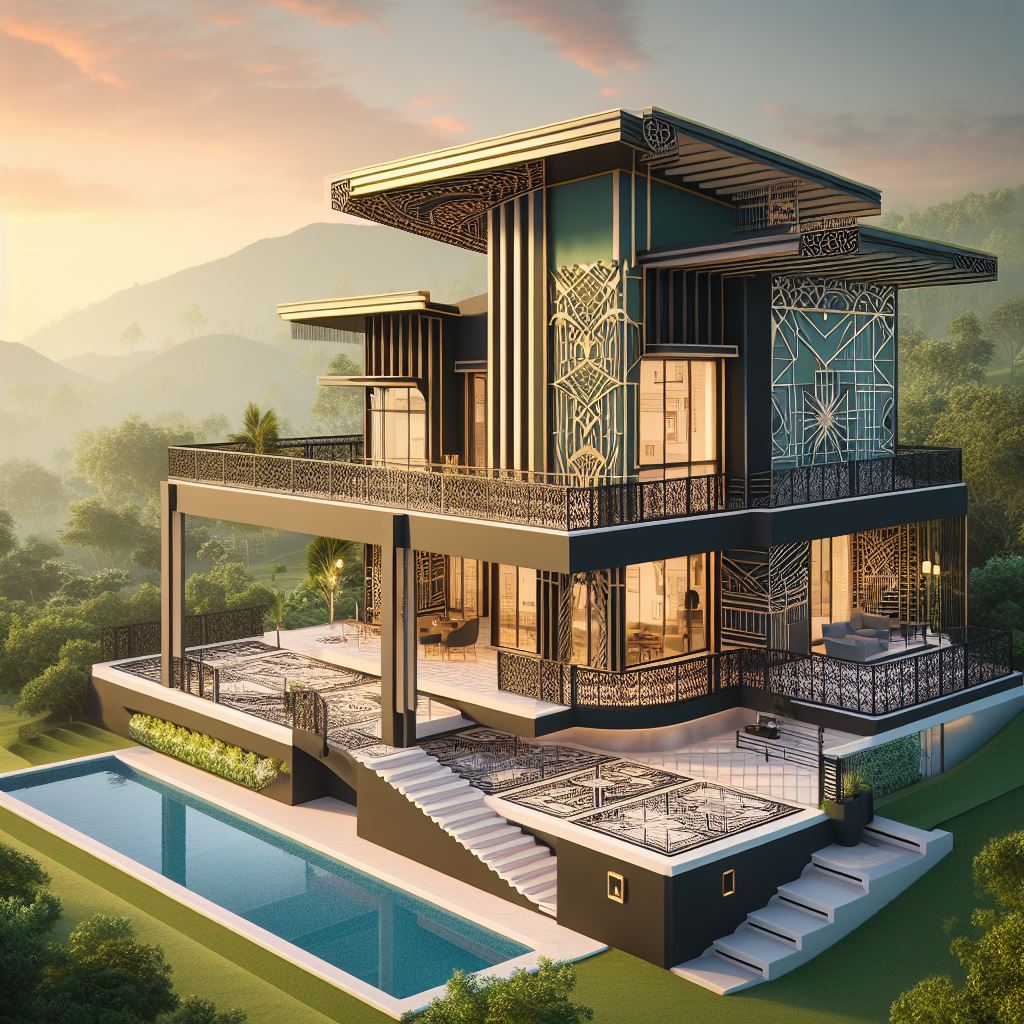
DALL-E

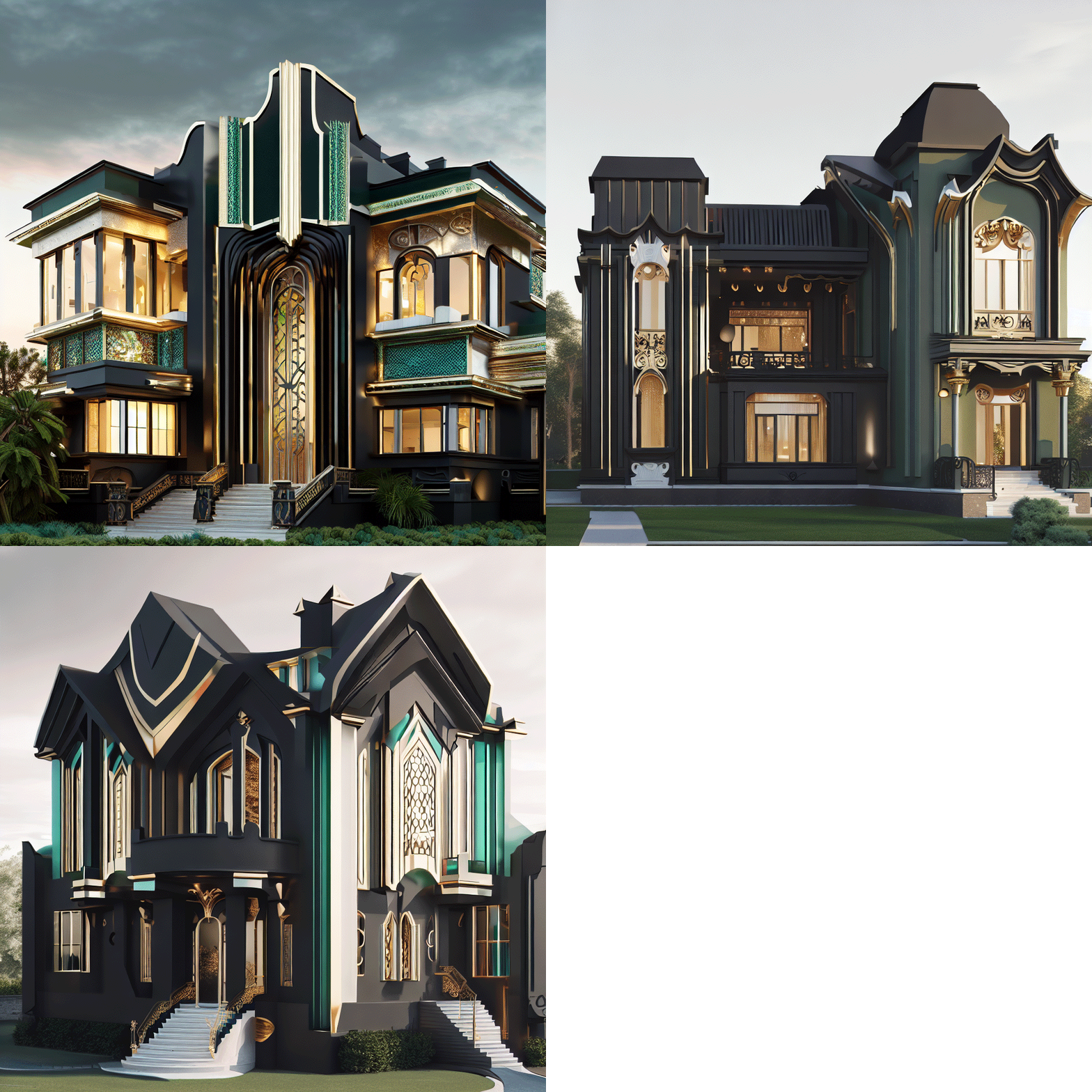
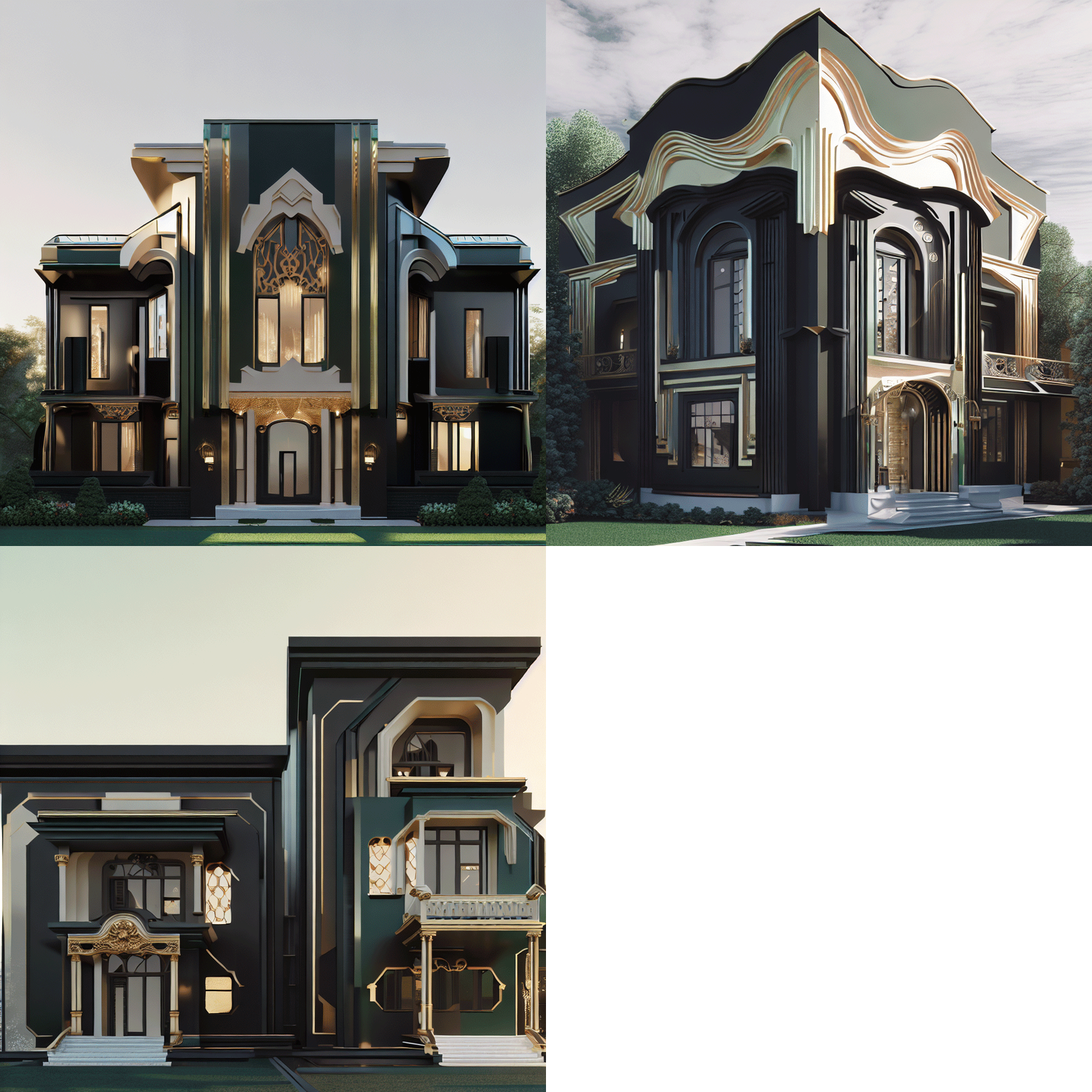
Overall some weird looking creations requiring the bare minimum of input (and bare minimum of thought, even with iterations!), definitely not something I could've sketched out myself in the same span of time (a few seconds), but very cool for tools that were widely non-existent just about two years ago. It may be the lack of entourage in the renders, but there's something eerily uncanny about the images themselves that I can't put my finger on, and there's a kind of plastic-y quality to the renders that seems pretty common among many of the free generators, a certain quality that's difficult to describe, but once you've seen enough, you know it's AI generated.
2024.0629
I think there may have been a time in my distant past where I imagined I'd be able to say something and a computer would produce it with some level of coherence and accuracy. The ideal machine might be something like the protein re-sequencer featured in Star Trek: Enterprise which accepts a voice command and materializes a food or drink of choice along with the requisite dishes, glasses and/or silverware. There is no hint as to the inputs required other than spoken thoughts; things then simply appear. I think that same magic is replicated with today's prompt-based AI generators. Here are two results of my ongoing trials of prompt-based AI-generated architectural renders, the first generated by Microsoft Designer and the second by DALL-E. While I don't know the real differences between how these two services generate such images, they're nonetheless powerful tools for design brainstorming and rapid ideation of a very unrefined ideas, and they will only get better. I like to think of them as the digital equivalent of a napkin sketch. A few more weird ones are forthcoming.
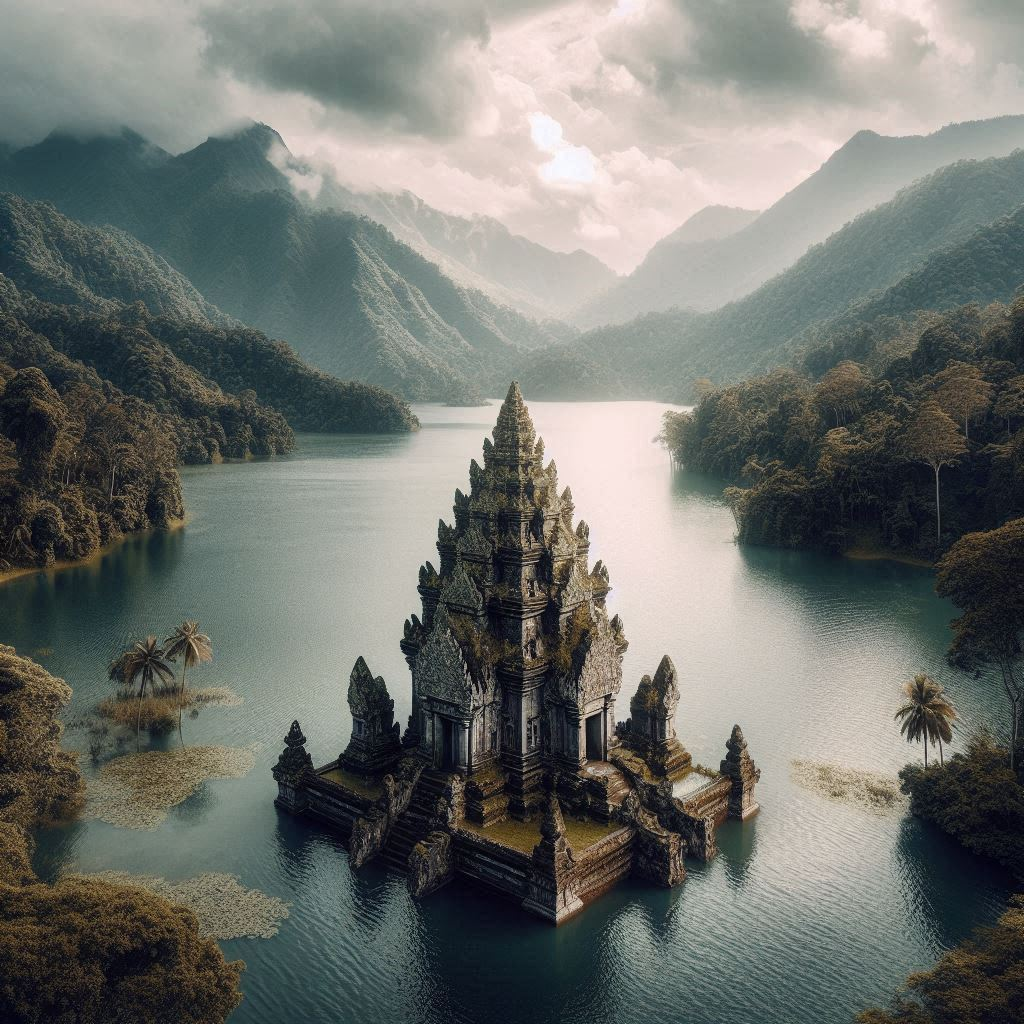
I don't recall the exact prompt for this, but I have a thing for elevating the artificial in the natural - imagining either ancient or futuristic architecture in the context of what's essentially a natural void. It could be partially related to the romanticization of ruins in 18th/19th century painting that I'm drawn to for the suggestion of perseverance, possibility or opportunity in adversity, but this type of imagery, gargantuan built structures (though seemingly unpopulated), in an undeveloped setting is blatantly filled not with possibility but actual accomplishment and achievement. Where the romanticization of ruins is, as I've come to understand now, spiritually negative - inspiring feelings of melancholy and longing for some idealized past and maybe even a sense of nihilism or pointlessness with regard to progress and life (which, maybe not surprisingly, I sometimes think about whenever I see some Postmodern and Deconstructivist work). These generated images (I like to think) project the present, presence, the start of something, a new beginning, growth. These are intended to be spiritually positive. The positive in the imagery is the thing in the center, the built, the artificial, the man-made, the aspirational, the idealized and planned future, the arduous upward movement despite struggle and not because of struggle. Here, the natural is the void, the zero, the world being left behind, the ruin still standing and in a state of decay, a past not forgotten, but built up on. That is the spirit of the kind of architecture, the kind of design, I'd rather pursue.
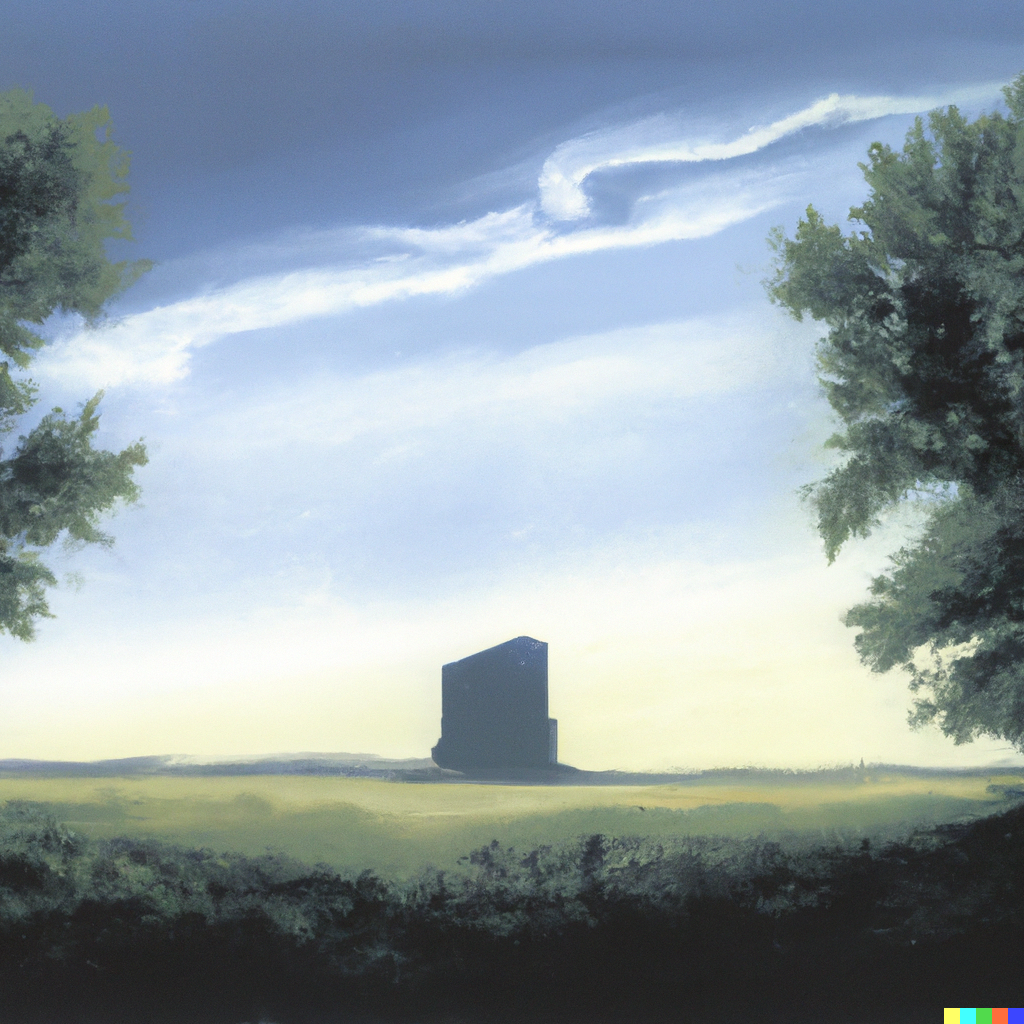
A midwestern landscape painted by Caspar David Friedrich with a monolithic architectural enigma in the middle of it.